
Your marketing wins the visit. Ricky makes it count.
An interactive local guide visitors talk to as they walk — turning a visit into longer stays, deeper exploration, and the stories visitors tell when they get home.
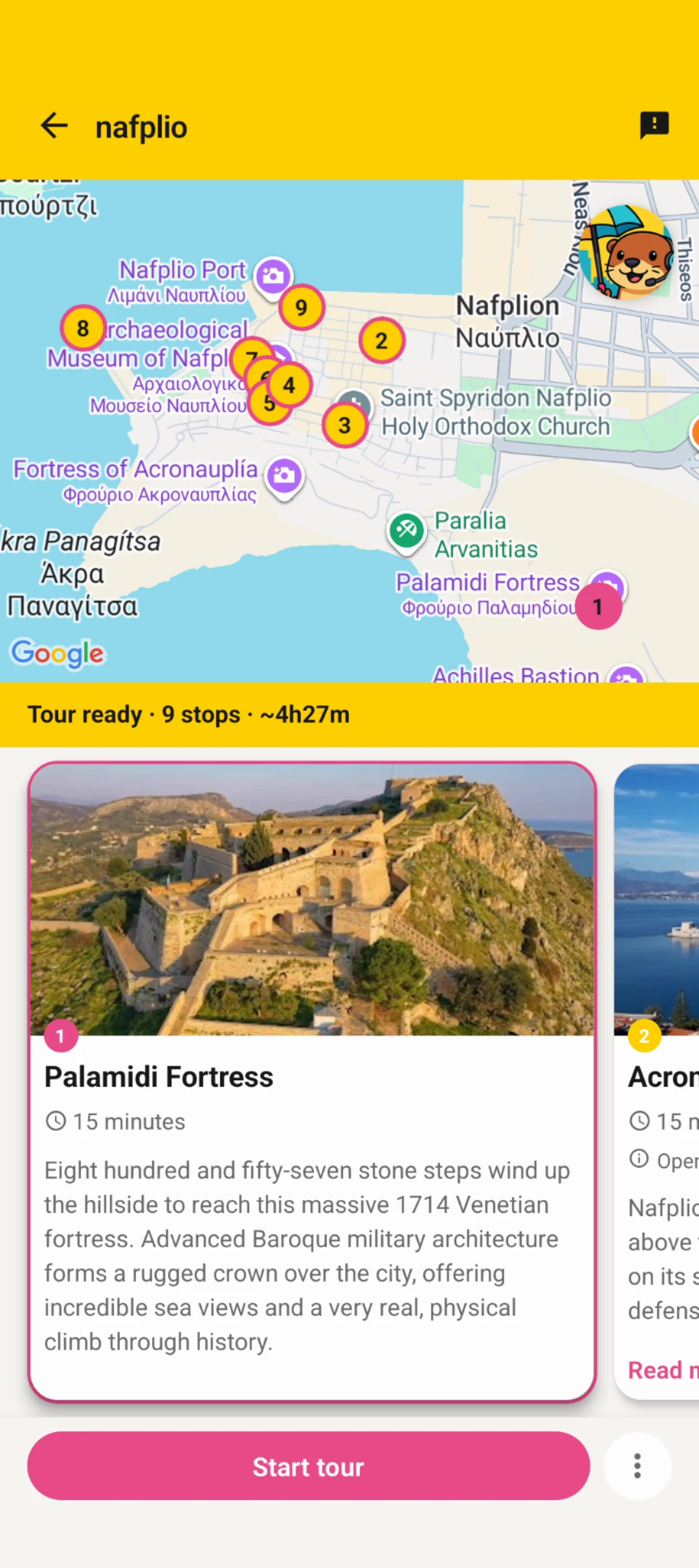
Built with the destination,
not for it.
With Ricky, you do. Ricky is AI made for the street, not the chat window: a guide that walks along, knows where it stands — and the destination decides what it says. At heart, every destination wants the same thing: visitors who understand the place — because those are the ones who stay longer, go further, and come back. The high-value visit everyone is competing for. From there it splits: smaller destinations are fighting to be found at all; bigger ones need visitors spread beyond a few famous spots. Ricky doesn't come with an agenda. It comes with controls: what gets told, which places get recommended, what your destination's answer actually says.
What fills it is yours too — a knowledge layer built with you, from the stories locals actually tell and the history that never made it onto the open web. The destination's own voice, in the visitor's pocket. Visitors get a guide they talk to as they walk; you see how the visit actually unfolds on the ground.
Curated, not scraped
Every tour draws only on a knowledge base built with the destination — community fieldwork, local sources, editorial review. When the guide doesn't know, it says so. No filler from the open web, no invented stories.
Owned, not licensed
The knowledge layer belongs to the destination. It powers Ricky's tours — and it's readable by other AI systems, so whatever assistant a visitor uses, your destination speaks from its own source.
Seen, not guessed
You see how visits actually unfold — which routes get walked, where visitors linger, what they ask about. The ground truth destinations have never had.
Three moments
from a real tour.
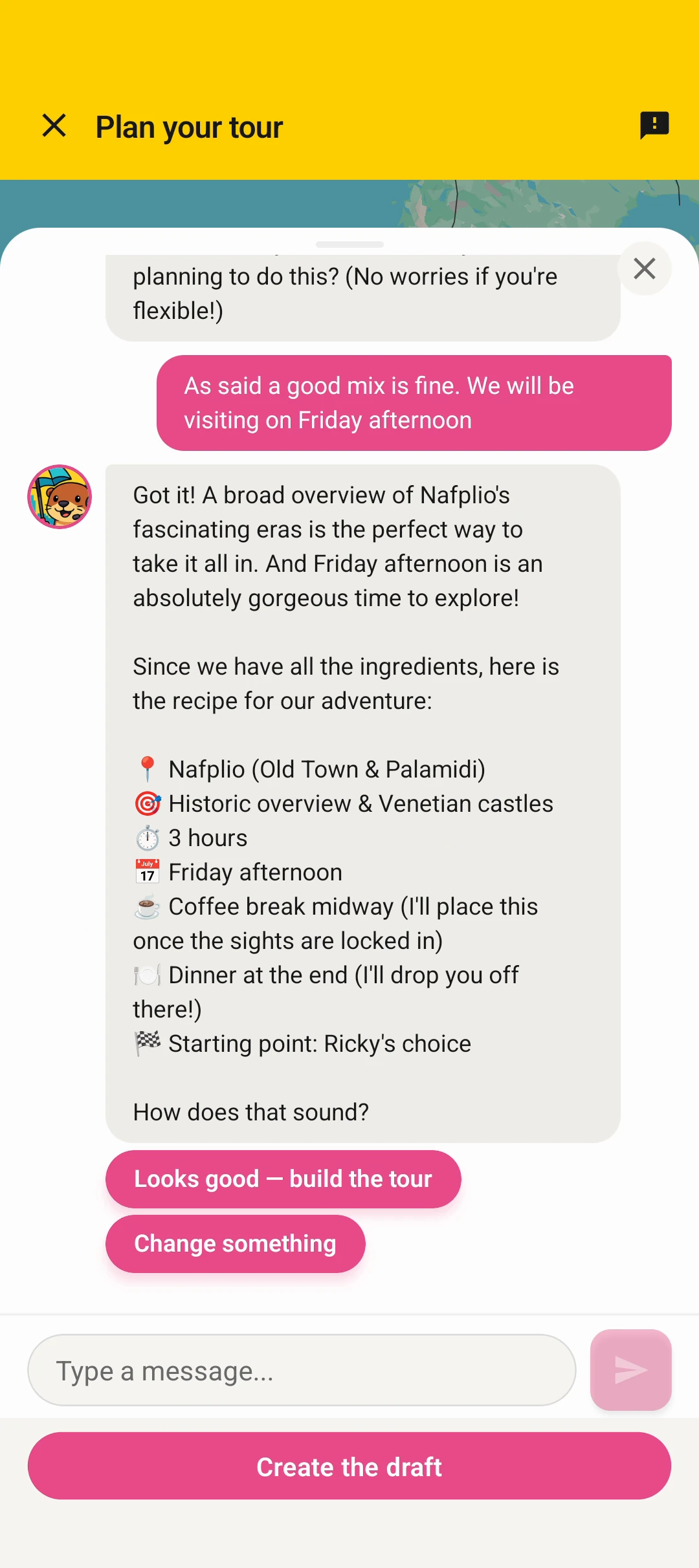
Shaped around the visitor.
Visitors describe what they want and what they need — half day, with a stroller, an accessible route, dinner at the end. Ricky crafts the tour around them.
A route the visitor can actually take.
Stops mapped into an arc that fits the day — monuments, museums, meal breaks — and the streets that work for them — and the places visitors would otherwise walk past.
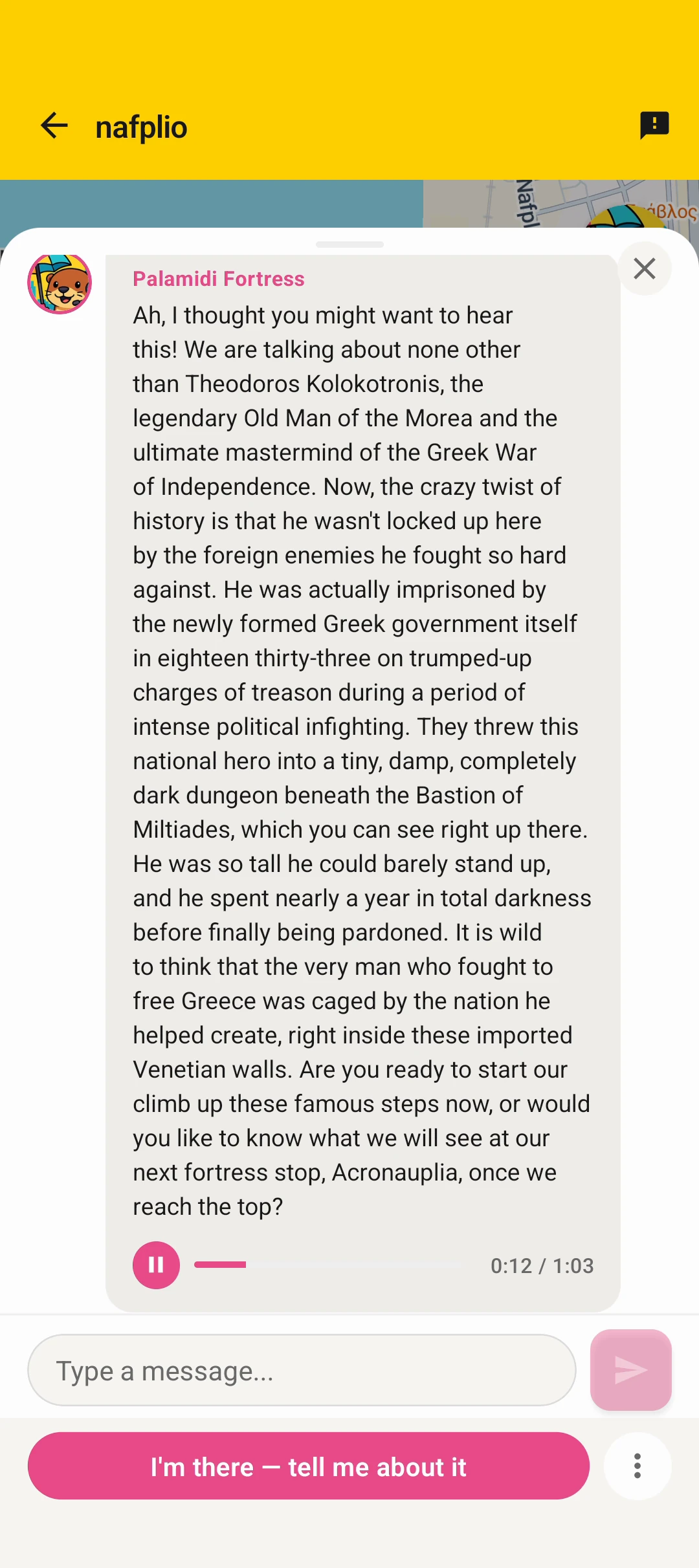
Curated, not invented.
Narration draws only on the destination's own knowledge base — and adapts to who's listening. Visitors ask questions, follow tangents, steer the story. The guide never fills gaps with fiction.
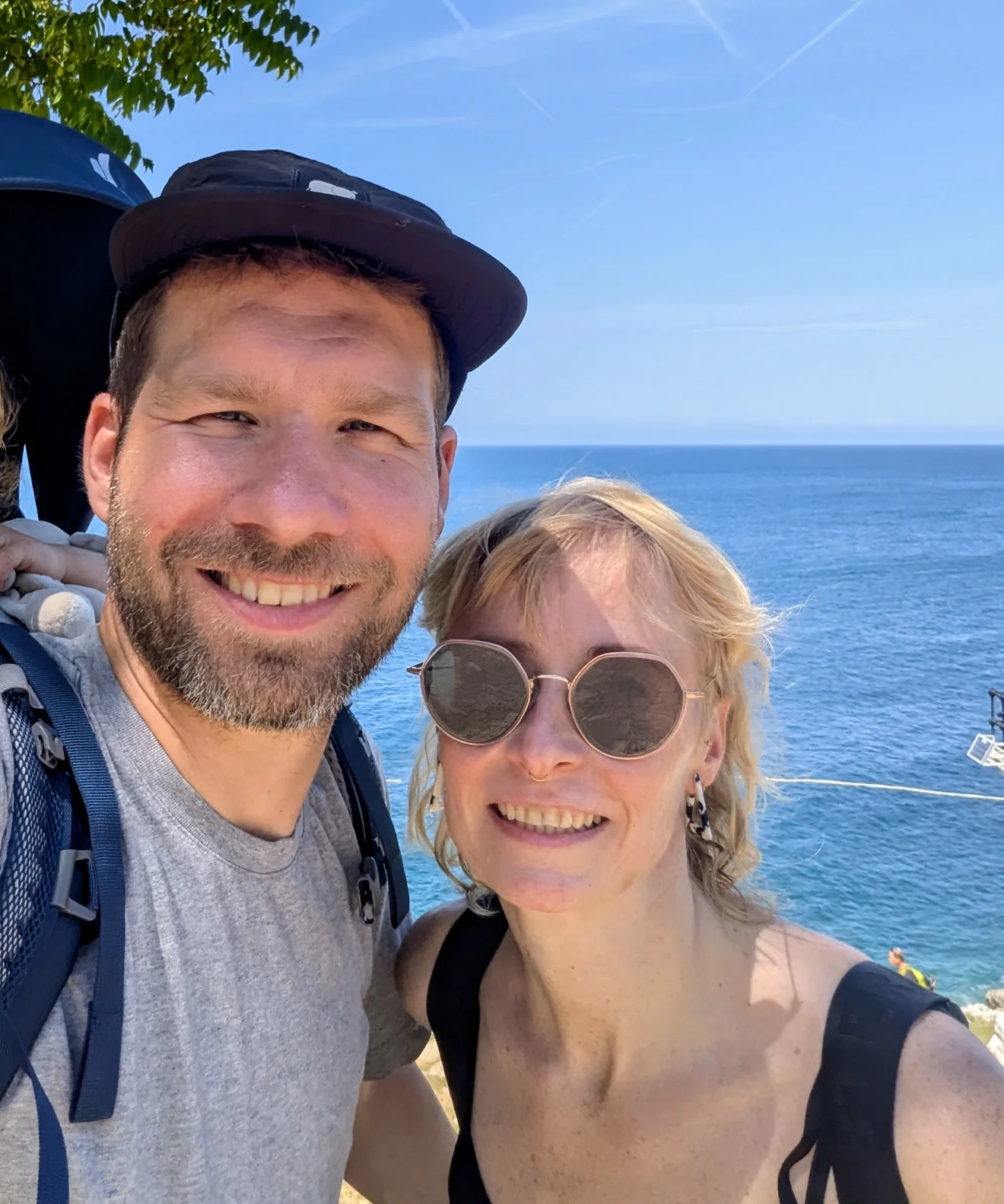
Where Ricky comes from.
Ricky started in Croatia, in 2025. Alex and Pia were traveling with their young child, drawn to the smaller towns away from the main routes, curious about the histories behind what they were seeing. There were no local guides. There was no time to prepare in advance — not with a child in tow, not when half the day went into figuring out which streets had stroller access.
Alex had spent the previous eleven years building Plantix, an AI product used by more than ten million smallholder farmers across Asia and Africa to diagnose crop problems and farm more sustainably. He saw what AI could do: hold a real conversation, shape a tour around what someone actually wanted, narrate it warmly while they walked. On the trip itself, he built a first prototype. It worked.
What it couldn't do was the part that mattered most. For the smaller towns — the ones with no guidebook, no curated content online — the AI fell back on whatever the open web had to say. Often that was very little, and what existed was thin. Worse, when the source material ran out, the AI started filling the gaps on its own — confidently telling stories that were partly wrong, sometimes entirely invented.
The stories that would have made those places come alive weren't on the internet. They were in the people who lived there — the 80-year-old baker, the fisherman, the grandmother who knew why the chapel was built where it was.
That's where the idea took its current shape: build the AI tour guide with destinations, not just for them. Capture the stories that aren't online. Make it something a municipality and its community could own and steer.
In early 2026 Alex left Plantix to develop it further.
Pia works on Ricky alongside him. Her background is in design — she's the one who shapes how Ricky feels in a visitor's pocket — and in organizing the kind of work this project actually requires: weeks of fieldwork in a destination, careful relationships with municipalities, the patient logistics of turning local stories into something a phone can carry.
If this resonates,
we'd like to hear
from you.
If you're thinking about what AI means for your destination — or want to see a tour built from a place you know — write to us. A first conversation is 20 minutes.
Aligned with the EU Sustainable Tourism Strategy and the dispersion logic of the Transition Pathway for Tourism.